Or Lack Thereof
When people say diversity is a problem, the question becomes—to whom? This third-grade student, Kerry, would disagree. And so would his mother.
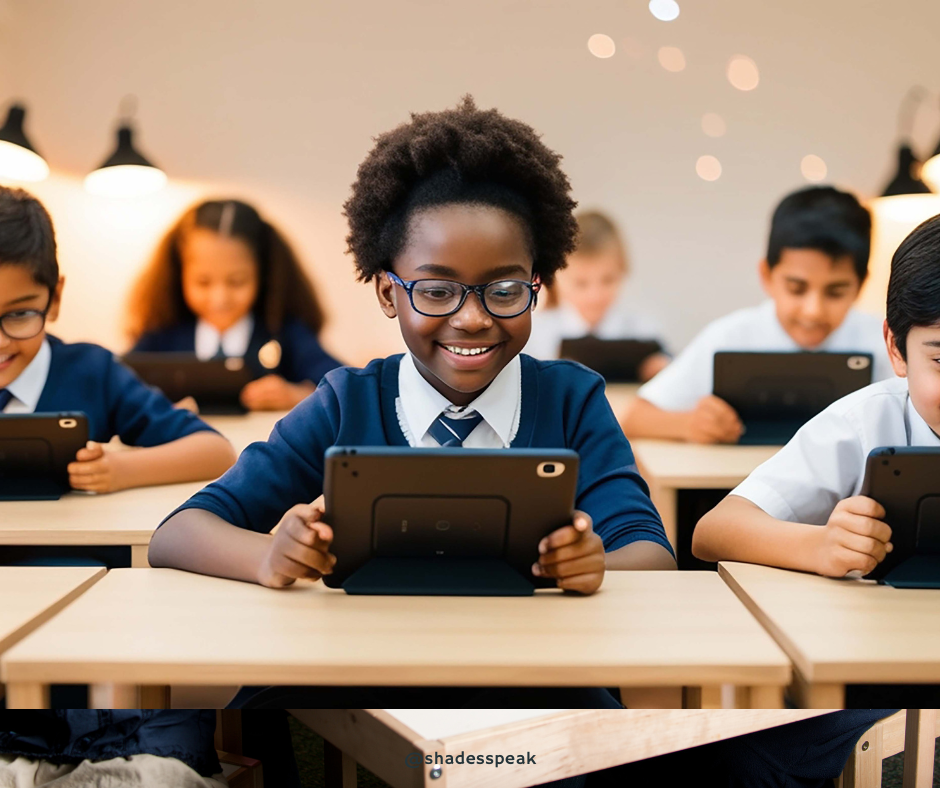
Kerry was an African-American male student who transitioned from a lower elementary school to our upper elementary building. Short and stocky, he greeted his speech-language pathologist with a beautiful smile every time he saw her—not just in the therapy room.
He was bright, enthusiastic about learning, and excited about speech and his new “speech teacher,” as he called her. In sessions, he was a delight—easy to work with because he wanted to do well. His enthusiasm showed every day. She could tell he wanted to make her proud. He cared what she thought, and he did his best. She knew that.
Then came the parent-teacher conference—one that would be forever etched into her memory.
That evening, Kerry’s mother pulled her aside, smiling from ear to ear. She didn’t want the other parents to hear what she had to say.
She shared, “My son came home the other day so excited to tell me that he met his new speech teacher.”
Kerry had said, “Mommy! Mommy! Guess what?”
“My new speech teacher is BLACK.”
He was so excited that his mom had to meet this speech teacher in person.
At first, it’s easy to think, What’s the big deal? What often gets missed is the sound of connection—connection through language, culture, and community in a way that’s hard to explain. If you know, you know.
Kerry is one of the lucky ones. That moment happened in third grade. Many students of color can go through their entire school experience without ever meeting a speech-language pathologist who looks like them—or another teacher of color who looks like them.
The Missed-Match: SLP and U.S. Population
According to the American Speech-Language-Hearing Association (ASHA), 92% of speech-language pathologists identify as non-Hispanic white, and 96% are female. Schools employ about 50% of the SLP workforce. That means only 8% identify as part of a minority group.
This represents a clear mismatch. Meanwhile, the demographics of the United States continue to shift and are projected to become a minority-majority country by 2044.
As a result, a child may go through an entire academic career without ever seeing a speech-language pathologist who looks like them—someone who understands their linguistic differences or their story in a way that reflects how they move through the world. Too often, this includes failing to recognize how a child’s dialect connects them to their community, or mistaking linguistic difference for a lack of intelligence—rather than seeing and expecting greatness.
When Diversity Is Absent in Education
When diversity is absent, the consequences are significant for Black and Brown children, especially boys. Research consistently shows that the absence of a same-race teacher often leads to lower academic achievement, disproportionality, disciplinary disparities, and negative psychological and identity outcomes.
In speech-language pathology, the consequences can include misdiagnosis—both overidentification and underidentification—delayed diagnosis, and limited access to quality services. These errors do not just affect children during their school years; they can change the trajectory of an entire adult life.
Why Diversity Matters
Undervaluing diversity harms us all, including our children. Every child deserves to take up space, to show their unique skills, and to be seen and valued—regardless of race, language, or culture. Children deserve spaces where greatness is expected and rewarded with meaningful opportunities. Spaces where total language is respected and valued—allowing a child to walk fully in themselves with pride.
How you view diversity depends on how you walk through the world and on your lived experiences. Still, that perspective does not diminish someone else’s reality.
For Kerry’s speech therapist, he stood on equal ground. His ability was never questioned.
No mask necessary.
He could just be himself.
He could just be great.
This journey matters.
Diversity matters.
And we all matter—individually and collectively.