
At Talking With Books, we say, “Access changes everything.”
It does.
Because access looks like me.
When living in a society where access comes easy for you, it’s easy to assume that everyone has that same access, equal access to resources and opportunities. This is simply not the case for everyone and depending on the region in which you were born, that story looks very different.
Let’s just look at education.
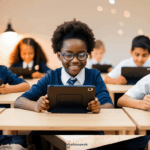
In the United States, children are entitled to a free and appropriate public education under the law. The teachers are educated and must meet minimum qualifications to do the job. Books, transportation, meals and other resources are provided to ensure that children are properly educated. In addition, this education further opens other opportunities such as a college degree and employment. And of course, at no cost to the parents.
This was not my story, at least in my early years.
You see, I was born in Jamaica—a place many people picture with beautiful beaches, amazing resorts, and a vibrant culture. And it is all those things, but there is a deeper story here—one of limitation and limited resources. This one doesn’t get a lot of press.
You couldn’t tell it by looking at me today, but I’m from a small rural village on the south coast of Jamaica—an agriculture and farming community. At that time, education wasn’t free. It meant that parents had to pay tuition for each term, along with other fees such as school uniforms, required books required for each grade, money for lunch and by the way, there were no school buses. At home, like many in the community, we had no children books outside of the textbooks required for school. Adding to that challenge, schools had no libraries and this continues to be a challenge today for many.
Since 2016, families are no longer required to pay tuition and other auxiliary fees, but are still responsible for other related fees such as lunches, uniforms, transportation and other needs. For many, this is a daily struggle.
As the story goes, I was one of the lucky ones.
I was fortunate to receive a good education in Jamaica, especially when compared to many children in my community. This was only possible because my mother immigrated to America when I was young and was able to help pay for that education.
When I later migrated to America, at age eleven, my access expanded even further. Those opportunities shaped my life in ways that continue to this day.
That led to a college education.
It led to what many would consider a great job, professional growth, and opportunities I would not have today.
That’s what access looks like.
But access does not look like this for every child.
And we also know that access to a free education doesn’t mean equitable, providing the level of individual support needed, and meaningful access to resources that support language, literacy and learning.
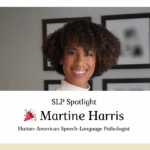
As a speech-language pathologist and the founder of Talking With Books, this has become part of my purpose:
To help ensure that children in under-resourced communities have access to books, parent-teacher support, and resources that support early oral language and foundational literacy skills.
Because access is more than having resources; it’s helping the whole community.
Help us put a book in every child’s hands.
Support Talking With Books.

Leave a Reply